
¿Se aprende mejor con miedo o con alegría? ¿Con miedo a repetir? ¿Con miedo a suspender? ¿Con miedo…? Pues bueno, he hecho una revisión de la literatura científica de los últimos diez años y, vamos, es superclaro. Normalmente, aprendemos mejor cuando sentimos interés, disfrute, motivación, seguridad emocional…
¡Suscrítebe gratis y apóyame aquí!
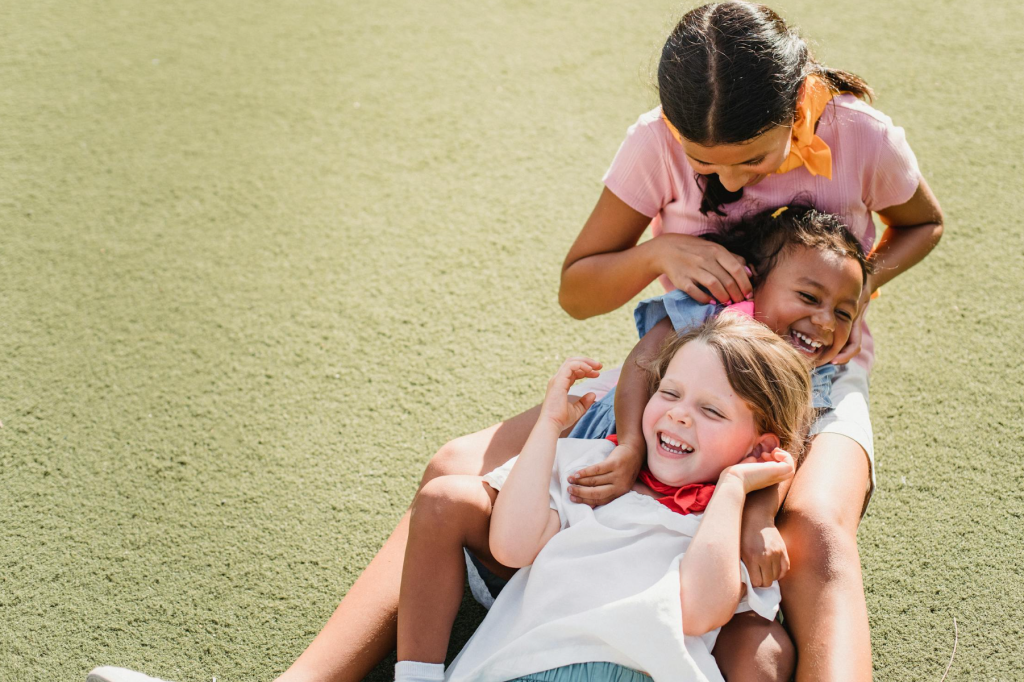
Las emociones positivas como la alegría, la esperanza, el orgullo, se relacionan con mejores notas, más atención y mejores estrategias de estudio. A ver, ¿qué es lo que pasa con el miedo? Pues el miedo y el estrés intenso activan el cerebro para sobrevivir, no para aprender. Pueden afectar a la memoria de trabajo, a la atención y a la consolidación de nuevos aprendizajes. Pues sí, pequeñas dosis de cierta tensión o ansiedad puntual pueden activar a algunas personas en momentos concretos, pero en un entorno basado en el miedo, la amenaza o la presión constante, pues puede perjudicar al aprendizaje a medio y largo plazo. Por eso, educar desde el respeto, la seguridad, el vínculo, no es de ser blandos, es entender cómo aprende realmente el cerebro. Y evidentemente tiene que haber límites claros.
Os dejo, ah, todas las citaciones bibliográficas de estas referencias de los últimos diez años.
BIBLIOGRAFÍA
Rodríguez-Muñoz, A., Antino, M., Ruíz-Zorrilla, P., & Ortega, E. (2021). Positive emotions, engagement, and objective academic performance: A weekly diary study. Learning and Individual Differences, 92, 102081. https://doi.org/10.1016/j.lindif.2021.102081
Liu, Y., Ma, S., & Chen, Y. (2024). The impacts of learning motivation, emotional engagement and psychological capital on academic performance in a blended learning university course. Frontiers in Psychology, 15, 1365609. https://doi.org/10.3389/fpsyg.2024.1365609
Acatrinei, A. M. (2024). The influence of motivation and academic emotions on academic performance in high school learning. Journal of Innovation in Psychology, Education and Didactics, 28(1), 51–64.
Frumos, F., Leonte, R.-E., Candel, O., Ciochină-Carasevici, L., Ghiaţău, R., & Onu, C. (2024). The relationship between university students’ goal orientation and academic achievement: The mediating role of motivational components and the moderating role of achievement emotions. Frontiers in Psychology, 15, 1321669. https://doi.org/10.3389/fpsyg.2024.1321669
Tan, J., Mao, J., Jiang, Y., & Gao, M. (2021). The influence of academic emotions on learning effects: A systematic review. International Journal of Environmental Research and Public Health, 18(18), 9705. https://doi.org/10.3390/ijerph18189705
Zhu, Y., Xu, S., Wang, W., Zhang, L., Liu, D., Liu, Z., & Xu, Y. (2022). The impact of online and offline learning motivation on learning performance: The mediating role of positive academic emotion. Education and Information Technologies, 27, 3883–3903. https://doi.org/10.1007/s10639-021-10777-0
Acosta-Gonzaga, E., & Ramírez-Arellano, A. (2021). The influence of motivation, emotions, cognition, and metacognition on students’ learning performance: A comparative study in higher education in blended and traditional contexts. SAGE Open, 11(2), 1–17. https://doi.org/10.1177/21582440211006744
Feraco, T., Resnati, D., Fregonese, D., Spoto, A., & Meneghetti, C. (2022). An integrated model of school students’ academic achievement and life satisfaction: Linking soft skills, extracurricular activities, self-regulated learning, motivation, and emotions. European Journal of Psychology of Education, 37, 715–738. https://doi.org/10.1007/s10212-022-00601-4
Xu, W., & Lou, Y. (2023). Changes in the socially shared regulation, academic emotions, and product performance in venue-based collaborative learning. Active Learning in Higher Education. Advance online publication. https://doi.org/10.1177/14697874231168786
Merz, C. J., & Wolf, O. T. (2022). How stress hormones shape memories of fear and anxiety in humans. Neuroscience and Biobehavioral Reviews, 140, 104793. https://doi.org/10.1016/j.neubiorev.2022.104793
Sarkar, D., & Saha, K. (s. f.). Positive emotions and academic performance among adolescents: A descriptive study. International Journal of Multidisciplinary Research and Growth Evaluation, 3(4), 111–115.
Kim, E. J., & Kim, J. J. (2023). Neurocognitive effects of stress: A metaparadigm perspective. Molecular Psychiatry, 28, 1328–1341. https://doi.org/10.1038/s41380-022-01877-8
Defante, M. L., Monteiro, S. O. N., & Teixeira, L. M. (2024). Neurobiology of the impact of aversive experiences on learning. Brazilian Medical Students, 9(13), 1–9. https://doi.org/10.53843/bms.v9i13.576
Zoladz, P. R., Cordes, C., Weiser, J. N., Reneau, K. E., Boaz, K. M., Helwig, S. J., … Rorabaugh, B. (2023). Pre-learning stress that is temporally removed from acquisition impairs fear learning. Biology, 12(6), 800. https://doi.org/10.3390/biology12060800
Sep, M. S. C., Geuze, E., & Joëls, M. (2023). Impaired learning, memory, and extinction in posttraumatic stress disorder: Translational meta-analysis of clinical and preclinical studies. Translational Psychiatry, 13, 267. https://doi.org/10.1038/s41398-023-02660-7
Sanguino-Gómez, J., Huijgens, S., den Hartog, M., Schenk, I. J. M., Kluck, W., Versluis, T. D., & Krugers, H. (2024). Neural correlates of learning and memory are altered by early-life stress. Neurobiology of Learning and Memory, 210, 107799. https://doi.org/10.1016/j.nlm.2024.107799
Schwabe, L. (2024). Memory under stress: From adaptation to disorder. Biological Psychiatry, 95(11), 904–914. https://doi.org/10.1016/j.biopsych.2023.12.018
Trask, S., Kuczajda, M. T., & Ferrara, N. C. (2022). The lifetime impact of stress on fear regulation and cortical function. Neuropharmacology, 213, 109044. https://doi.org/10.1016/j.neuropharm.2022.109044
Liu, W. (2022). Investigating the effects of stressful stimuli on learning and working memory. Psychology, 13(10), 1685–1696. https://doi.org/10.4236/psych.2022.1310100
Sanguino-Gómez, J., & Krugers, H. (2024). Early-life stress impairs acquisition and retrieval of fear memories: Sex-effects, corticosterone modulation, and partial prevention by targeting glucocorticoid receptors at adolescent age. Neurobiology of Stress, 24, 100616. https://doi.org/10.1016/j.ynstr.2024.100616